The marketing world is fast-paced and ever-evolving, but one concept remains constant: the marketing funnel. It’s the framework that guides businesses in converting potential customers into loyal advocates. If you’ve ever wondered how to strategically map out your customer’s journey, this blog is for you.
By the end of this post, you’ll have a solid grasp of the marketing funnel, its stages, and how to optimize it for maximum success. Let’s dive in!
What is a Marketing Funnel?
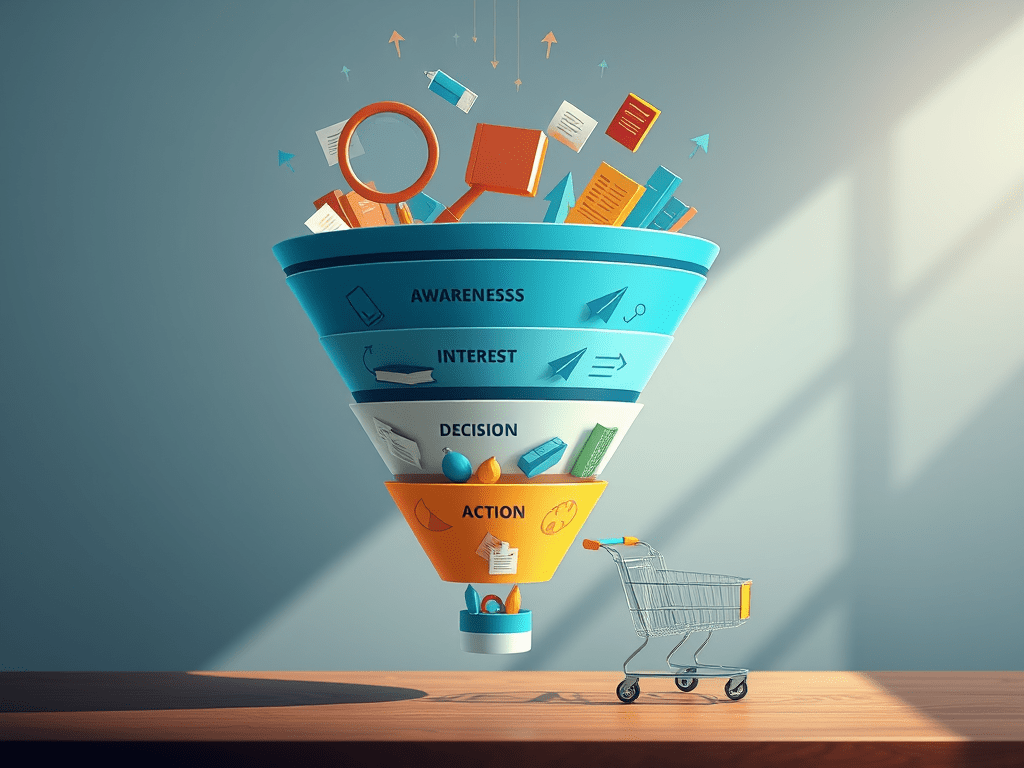
At its core, a marketing funnel is a visual representation of the journey customers take from first learning about your business to making a purchase (and beyond). It’s called a “funnel” because the number of potential customers narrows at each stage.
Imagine starting with a broad pool of people who might be interested in your product or service. As they move through the funnel, only the most engaged and interested individuals proceed to the final stage—making a purchase.
Why is the Marketing Funnel Important?
The marketing funnel isn’t just a trendy term; it’s a powerful tool. Here’s why:
- Focus on the Customer Journey:
Understanding the funnel allows you to meet your customers where they are in their decision-making process. - Efficient Resource Allocation:
It helps businesses target the right audience with the right strategies, ensuring that no effort goes to waste. - Better ROI:
A well-optimized funnel leads to improved conversion rates and higher returns on your marketing investments. - Builds Long-Term Relationships:
By addressing each stage of the funnel, you’re not just selling a product; you’re nurturing trust and loyalty.
Breaking Down the Marketing Funnel
Let’s explore the key stages of the funnel and how to approach them:
1. Awareness (Top of the Funnel)
This is where it all begins. At this stage, your audience is just discovering your brand. The goal here is simple: get noticed.
Strategies for Awareness:
- Use social media ads to boost visibility.
- Publish blog posts that solve common problems in your niche.
- Partner with influencers to tap into their audience.
Example: Imagine you own a fitness brand. You could create a blog post titled “10 Simple Exercises for Busy Professionals” or launch an Instagram ad showcasing your innovative fitness equipment.
2. Interest (Middle of the Funnel)
Now that people know about you, it’s time to engage them. At this stage, potential customers are seeking more information. Your job is to educate and nurture their interest.
Strategies for Interest:
- Offer free resources like eBooks, webinars, or guides.
- Share testimonials or case studies to build credibility.
- Use email marketing to provide personalized content.
Example: A fitness brand could offer a free downloadable meal plan or a 7-day fitness challenge to keep their audience engaged.
3. Decision (Middle of the Funnel)
This is the make-or-break moment. Your potential customers are considering whether to choose your product or service over competitors. The key here is to highlight value.
Strategies for Decision:
- Offer discounts or limited-time promotions.
- Create product comparison charts that highlight your advantages.
- Provide free trials or demos.
Example: If you’re selling fitness equipment, consider offering a 10% discount for first-time buyers or a free consultation with a fitness expert.
4. Action (Bottom of the Funnel)
The final step is conversion—when your lead takes the desired action, whether it’s making a purchase, signing up for a subscription, or booking a consultation.
Strategies for Action:
- Simplify the checkout process to avoid cart abandonment.
- Send reminder emails for incomplete purchases.
- Encourage reviews and referrals post-purchase.
Example: Your fitness brand could send a follow-up email offering a discount on future purchases if the customer leaves a review.
Post-Funnel: Building Customer Loyalty
The journey doesn’t end with the purchase. In fact, the most successful businesses invest in retaining customers and turning them into brand advocates.
Tips for Building Loyalty:
- Provide exceptional customer service.
- Send personalized thank-you messages.
- Offer exclusive deals to repeat customers.
Optimizing Your Marketing Funnel
Here’s how to fine-tune your funnel for maximum impact:
- Analyze Data Regularly:
Use tools like Google Analytics or HubSpot to track how users move through your funnel. Identify drop-off points and refine your approach. - Segment Your Audience:
Not all customers are the same. Personalize your marketing strategies based on demographics, behaviors, and preferences. - Test and Experiment:
A/B test your email campaigns, landing pages, and ad creatives to see what resonates best with your audience. - Focus on Content:
Content is the backbone of any funnel. Create engaging blogs, videos, and social media posts tailored to each stage.
Real-Life Example: A SaaS Company
Let’s say you run a SaaS (Software as a Service) company that provides project management tools. Here’s how your funnel might look:
- Awareness: Launch a blog titled “Top 5 Project Management Challenges and How to Solve Them.”
- Interest: Offer a free downloadable guide on effective team collaboration.
- Decision: Provide a 14-day free trial of your software.
- Action: Send personalized onboarding emails to help users get started.
By addressing each stage strategically, you increase the likelihood of turning casual browsers into paying customers.
The Takeaway
Understanding and optimizing the marketing funnel is essential for any business aiming for long-term success. It’s not just about selling—it’s about building trust, engaging your audience, and creating a memorable customer journey.
So, where do you start? Begin by analyzing your current strategies and identifying gaps in your funnel. Focus on providing value at every stage, and success will follow.
 Market Hive
Leave a comment